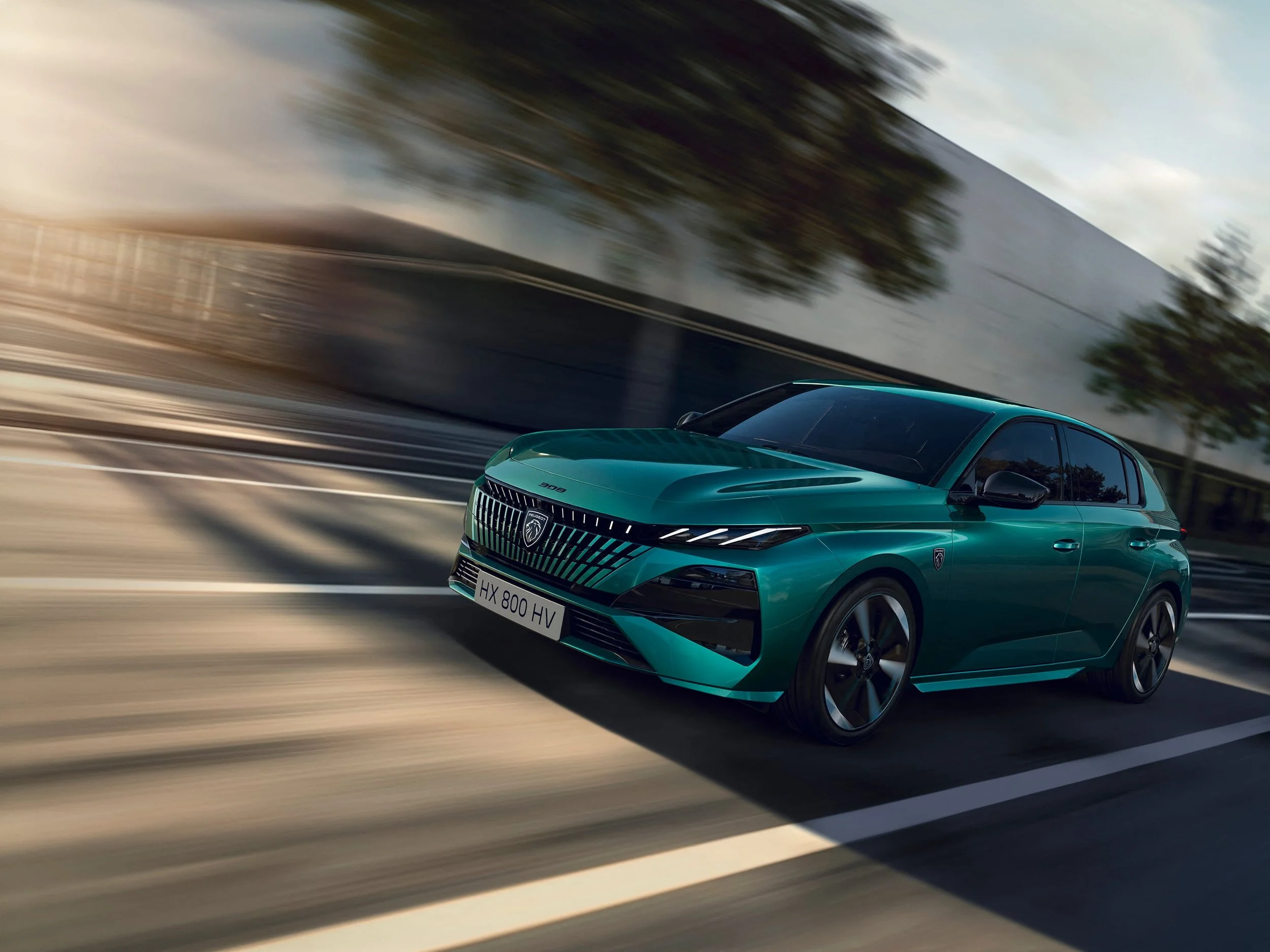
Peugeot 308 SW Review.
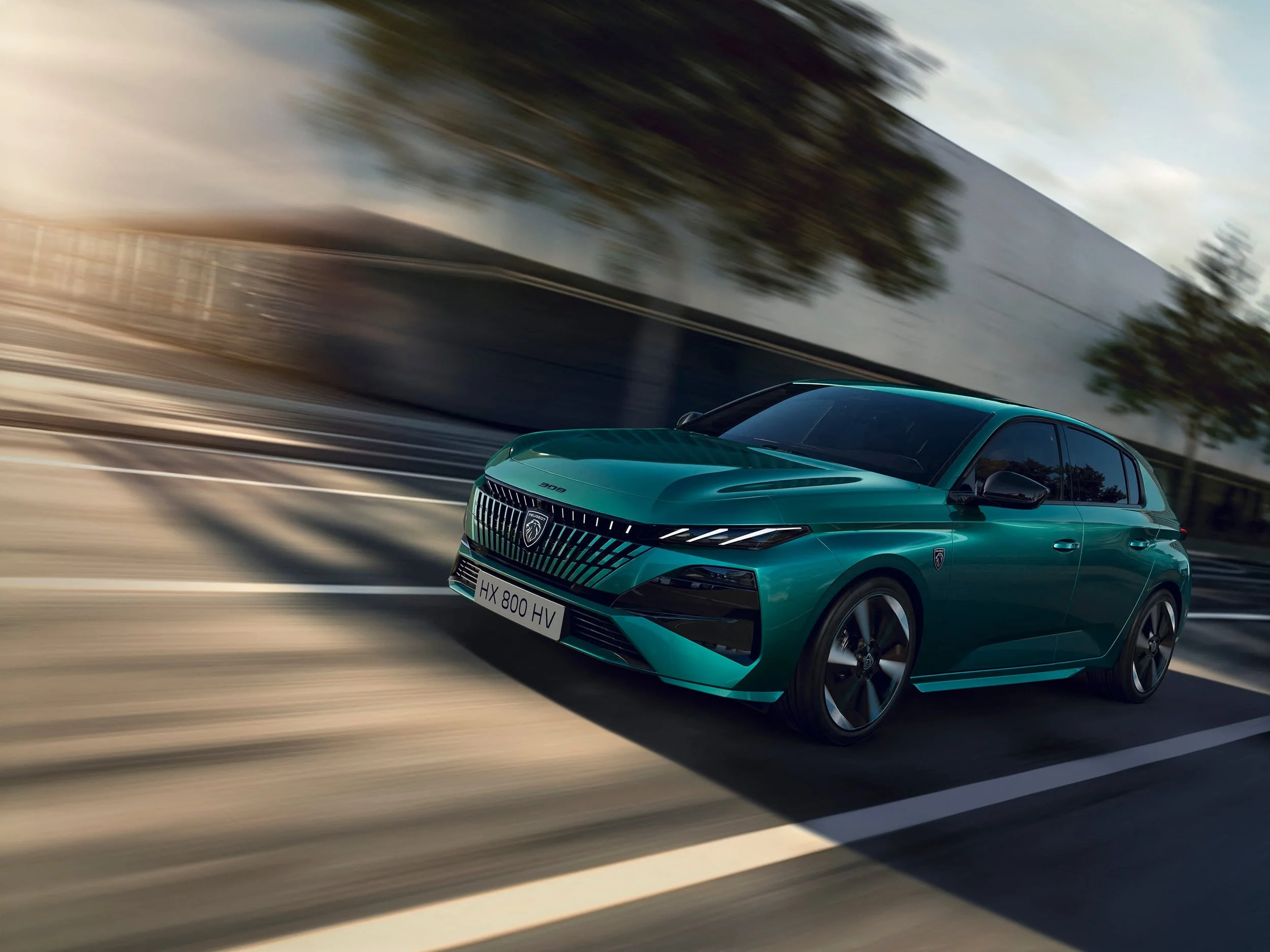
The super-versatile Peugeot 308 SW estate is extremely practical and makes an ideal family car. It is not the largest in the category, but it can carry five people with luggage and, more often, the weekly shopping. Jeremy Webb tackled the country roads of the Cotswolds and the towns of Oxfordshire, where the 308 SW proved a useful and enjoyable carrier.
The Peugeot 308 SW has received a sharper new look and significant price reductions to remain competitive against the growing number of family SUVs on the market, including models like the Subaru E-Outback and the Polestar 4 wagon. Customers can choose from two hybrid powertrains or the all-electric E-308 SW. There are three trim levels available: Allure, GT, and GT Premium.
The Peugeot 308 SW starts at just over £31,000, which is slightly higher than the Skoda Octavia Estate. However, the base version comes with a pure petrol engine and a manual gearbox. To obtain the Skoda with mild-hybrid power and an automatic transmission, similar to the entry-level Peugeot, you'll need to pay around £32,000.
On the other hand, the E-308 SW begins at just under £31,000, which is over £10,000 lower than its previous price due to a substantial price cut and the Government's Electric Car Grant (ECG), which provides a £1,500 discount.
This pricing positions the E-308 SW in the same bracket as other zero-emission family cars, such as the Skoda Elroq, MINI Countryman, and Nissan Leaf SUVs, as well as the Volkswagen ID.3 and Renault Megane hatchbacks. To stand out in this competitive landscape, the E-308 SW leverages Peugeot's distinctive design and features.
The Peugeot 308 SW handles well and is comfortable on UK roads. However, the brand's reputation for delivering enjoyable-to-drive vehicles has suffered in recent years. Peugeot's past lineup, which included superminis and larger saloons, was known for its excellent handling and smooth rides, but recent models have been average. Fortunately, while the 308 SW may not fully restore that reputation, it is a capable and well-composed option that is closer to the class leaders than one might expect.
When driving, the 308 SW is quite nimble in urban areas, thanks to its quick steering, which provides good feedback and precision. However, some drivers might find it challenging to set the very small i-Cockpit steering wheel low enough to clearly see the instrument dials. Passengers will appreciate the comfortable ride, as the 308 SW’s suspension effectively smooths out road imperfections.
The E-308 SW now features an adjustable regenerative braking system, with paddles behind the steering wheel that offer three different levels of braking strength. These settings are described as “unnoticeable,” “barely noticeable," and “fairly noticeable,” indicating how quickly the car slows when the accelerator is released. Even the strongest setting provides a gentle deceleration. However, there is no one-pedal driving mode, which could have enhanced the driving experience, especially in stop-and-go traffic, and there is also no auto-hold function to ease the stress of driving in such conditions.
On faster roads, the Peugeot 308 SW maintains a pleasing balance and neutrality, thanks to its decent grip. Body movements are well-contained, and the steering is precise. While the recently discontinued Ford Focus Estate was more agile and engaging to drive, the Peugeot still offers a hint of the nimble responses and comfortable ride that characterised its renowned family cars from the eighties and nineties.
The Peugeot handles the UK's uneven roads quite well, effectively absorbing impacts from potholes. However, you may hear a loud thud when traversing one. There is also noticeable road noise entering the cabin, and on irregular surfaces, the car can start to fidget.
The mix of efficient hybrid engines and an electric vehicle (EV) version makes the 308 SW budget-friendly for families.
The base hybrid model is ideal for those who either don't have access to charging facilities or wish to avoid the hassles that come with them. The E-308 EV is expected to be the most economical option, particularly for company car drivers. The plug-in hybrid version offers a balance, providing better fuel efficiency than the standard hybrid while maintaining the flexibility of a petrol engine alongside electric power.
Peugeot claims the regular hybrid 308 SW can achieve up to 62.6 mpg. This model should be especially fuel-efficient for city driving, as the electric motor can assist during stop-and-go traffic.
The plug-in hybrid version offers similar benefits, but with a pure electric range of up to 59 miles, thanks to its 17.2 kWh battery. This variant can reach up to 148.1 mpg. However, like all plug-in hybrid electric vehicles (PHEVs), owners will need to charge the car regularly and spend as much time as possible driving in electric mode to come close to that figure.
Peugeot's zero-emissions estate vehicle now features a 55.4 kWh usable battery, up from 50.4 kWh. This upgrade has extended the range from 255 miles to 275 miles. For comparison, the most affordable Skoda Elroq can achieve up to 267 miles on a single charge, while other versions feature a larger battery that extends the range to 355 miles.
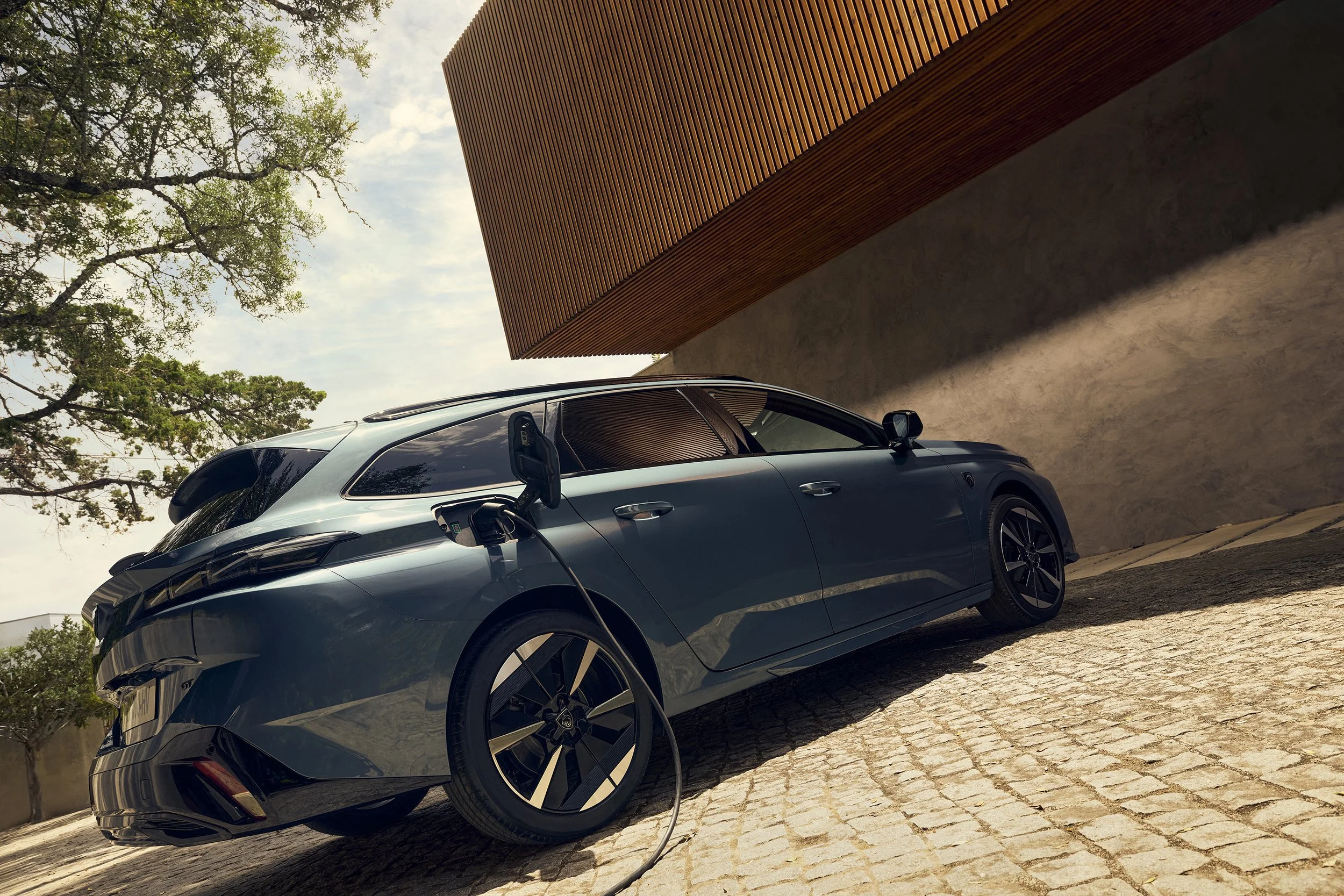
During our testing across various roads, we averaged 3.0 miles per kWh, which translates to a real-world range of less than 170 miles from a full charge. Additionally, the Peugeot's maximum charging speed is 100 kW, which is significantly lower than many competitors, including the Skoda, which can reach up to 175 kW. Fully charging the E-308 SW's 55.4 kWh battery using a standard 7.4 kW home wallbox should take approximately nine hours.
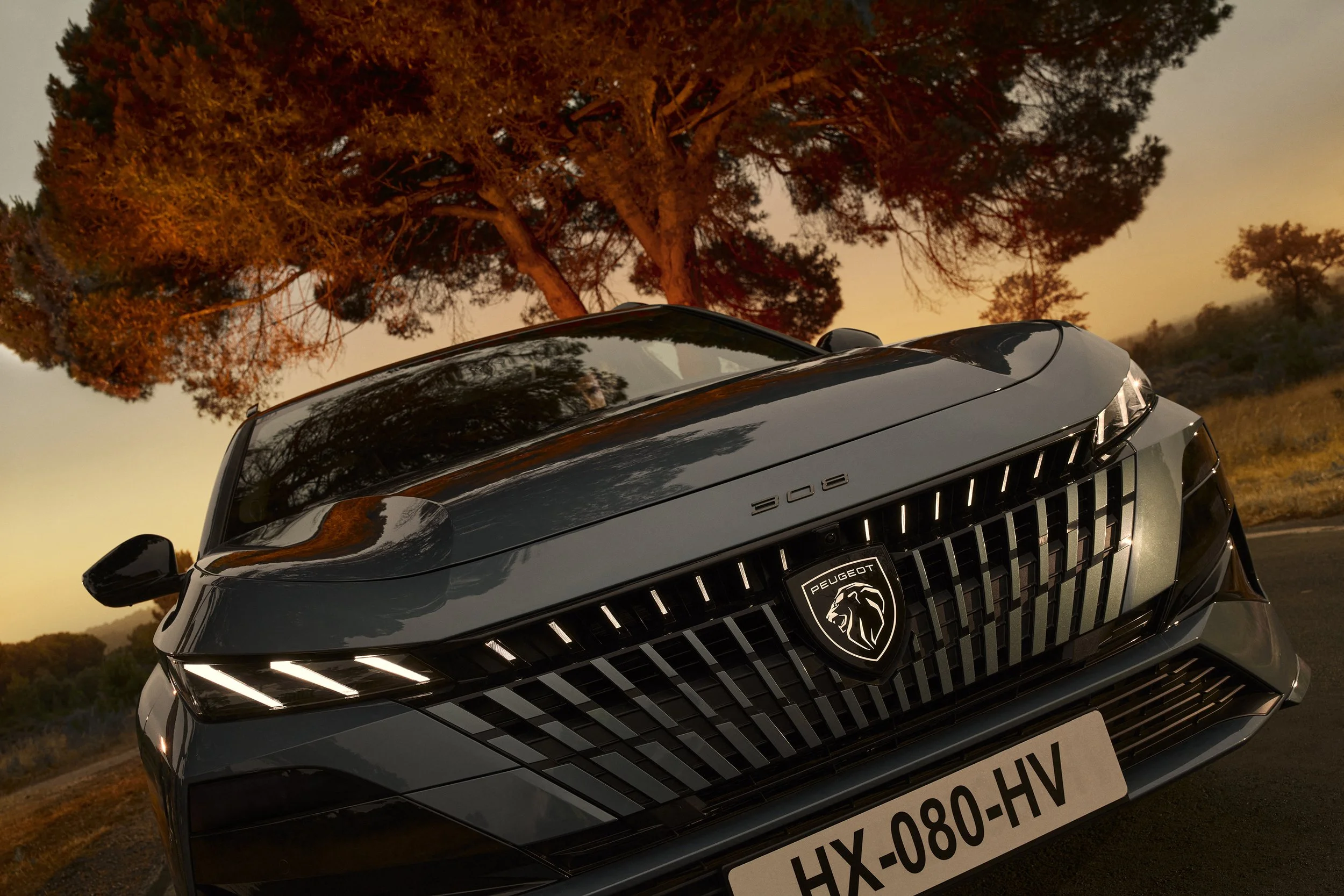
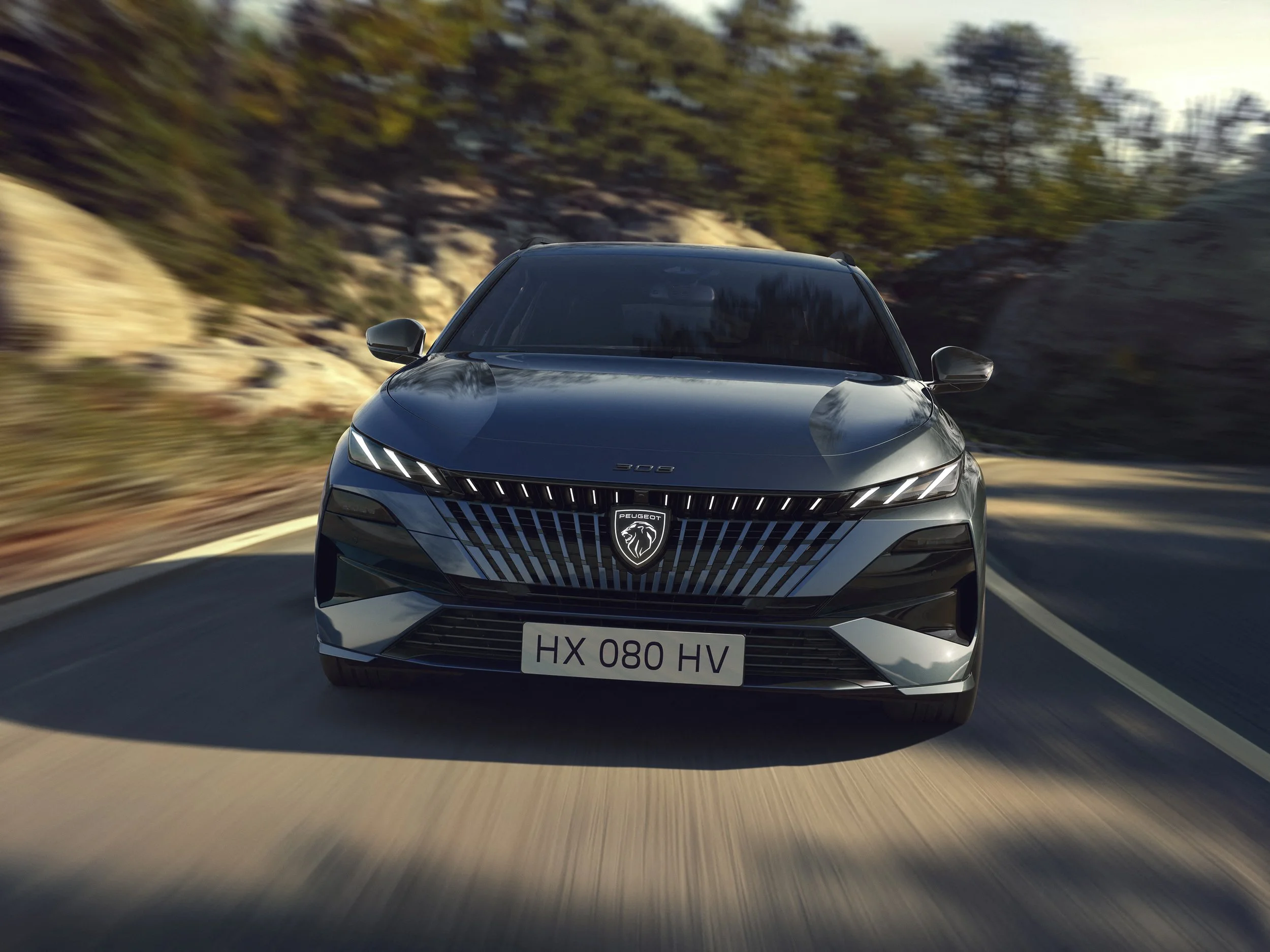
The majority of the visual changes are at the front of the vehicle. The new grille features thicker body-coloured accents and, for the first time, an illuminated Peugeot emblem, available on all models except the base-spec model. Illuminated logos are a current trend among car brands, with Volkswagen, Vauxhall, Mercedes, and others also enhancing their badges with lighting.
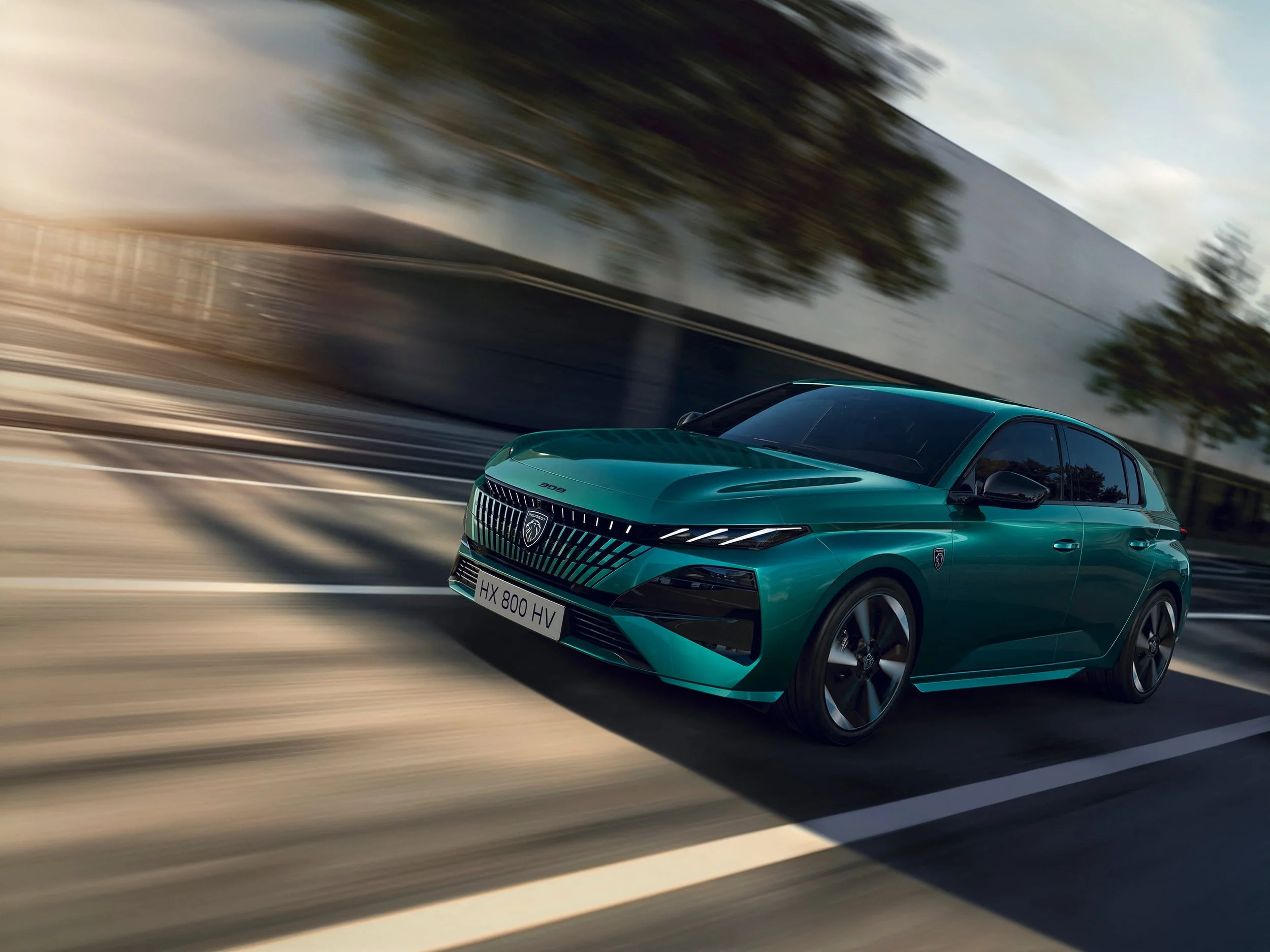
The daytime running lights (DRLs) are now connected by small LED strips along the car's nose. The main headlights are separate units hidden behind large gloss-black air vents in the redesigned bumper, which has a more aggressive look and helps make the car appear wider.
There are also new alloy wheel designs available in 17- or 18-inch sizes, along with a new standard paint colour, Ingaro Blue. The only update to the rear is that all models now come equipped with 3D 'three-claw' tail lights, previously exclusive to higher-end models.
The interior changes for the 2026 model year are quite subtle, featuring new seat fabrics, updated graphics for the 10-inch driver’s digital display, and additional luxuries for top-tier models. These include Alcantara heated, massaging seats and a 360-degree camera.
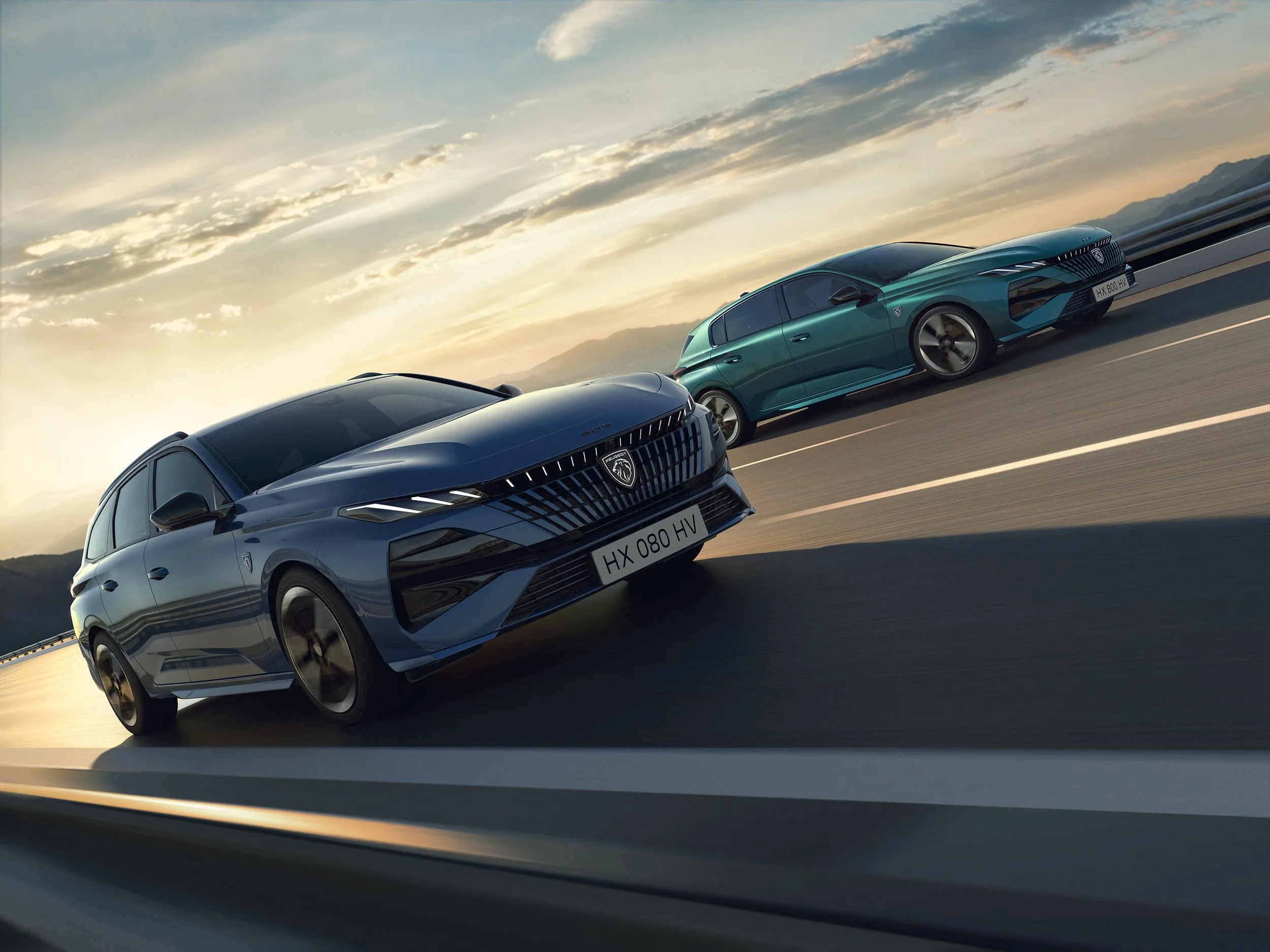
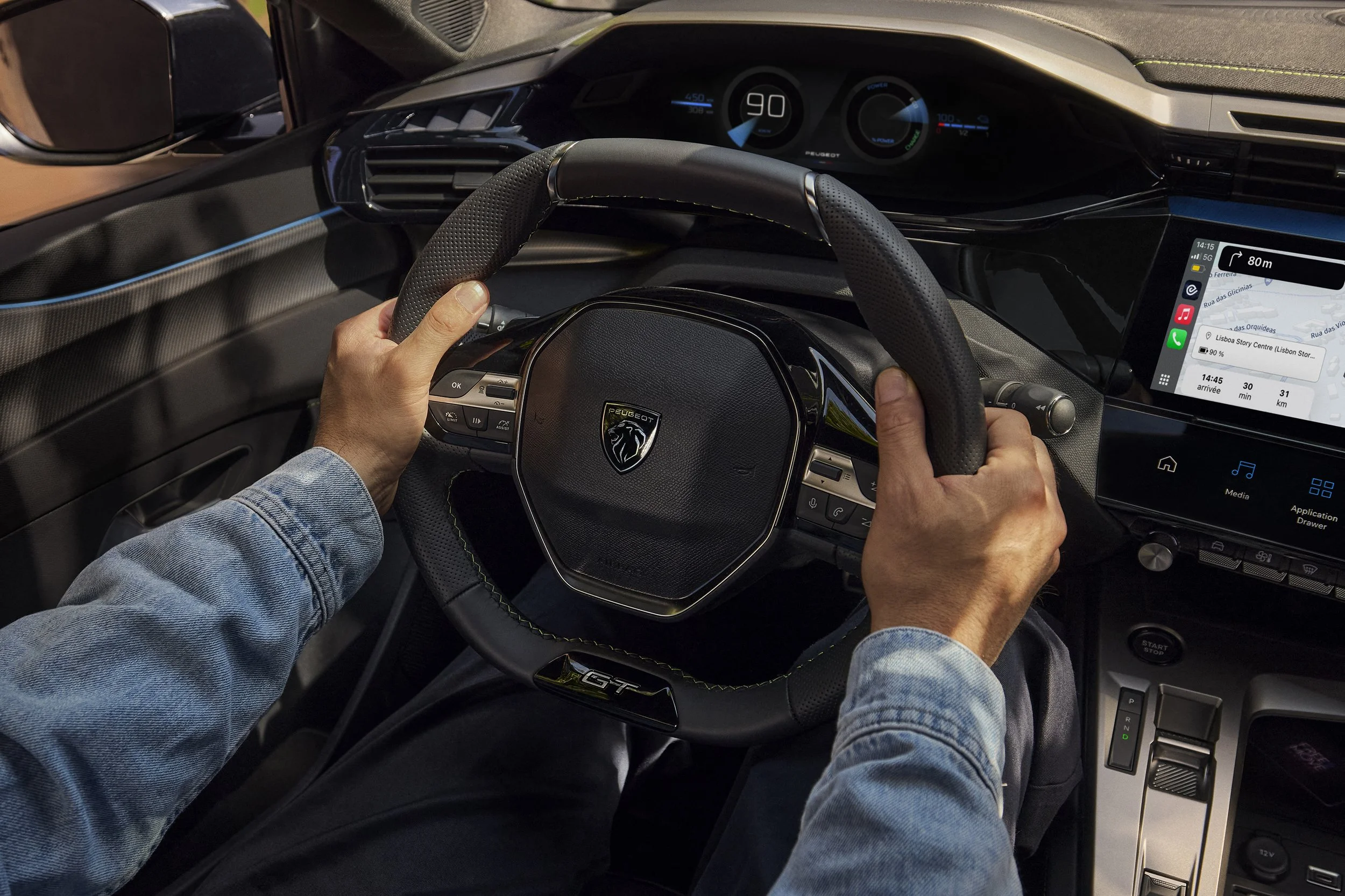
Peugeot’s unique i-Cockpit layout, however, remains a notable concern. For those who may not be familiar, this design requires drivers to look over the top of the small, chunky, octagonal steering wheel to see the 10-inch instrument cluster. This setup can lead to an awkward driving position for some individuals, as we have experienced. Therefore, we recommend that potential buyers try it out for themselves before making a purchase.
I found it easier to achieve a comfortable driving position in the E-308 SW compared to other Peugeot models I have tested, and I was able to read the entire display without issue. However, if you lower the steering wheel too much, you might inadvertently hit your leg when cornering, so it's wise to be cautious on twisty roads or to use the police-approved wheel-shuffling technique.
The interior of the vehicle features a crisp design that exudes a premium feel, thanks to its solid build and careful selection of high-quality materials. The 10-inch central touchscreen is bright and sharp, and wireless Apple CarPlay and Android Auto come standard in every 308 model. However, the infotainment system can be confusing to navigate and is not particularly responsive. Peugeot tries to mask the slow loading times of the menus with transitions reminiscent of PowerPoint slides.
In the GT or GT Premium models, which we tested, there is an additional display that includes a row of large customisable ‘i-Toggles’ shortcut buttons, which can be helpful. Below this display are physical switches, including one that lets you deactivate some Advanced Driver-Assistance Systems (ADAS) features with a press lasting about a second.
Most of the car's other functions, such as adjusting the cabin temperature, must be done through the main touchscreen. This can be frustrating and distracting due to the system's lagging response times. Interestingly, in the entry-level Allure trim, the E-308 is equipped with physical climate controls instead of the i-Toggles panel. This includes temperature dials and a rocker switch for fan speed. While these may not appear as sleek, this setup is more user-friendly.
The Peugeot 308 SW offers a decent-sized boot, but it could benefit from more rear legroom. The i-Cockpit design features a smaller-than-average steering wheel, which may not suit everyone. However, there is ample adjustment available to help drivers find a comfortable position where they can clearly see all the dials, although it may take some time to get it just right. The seats are supportive, and there is plenty of useful storage throughout the cabin, making the 308 SW a practical choice for families.
In terms of practicality, adults may find the rear cabin a bit cramped. While there is sufficient headroom, legroom is just adequate for anyone around six feet tall, thanks to the sculpted backs of the front seats that provide some space for rear passengers' knees. Kids and teenagers will have no problem, though, as there are two USB-C charging ports and cup holders available. The 308 SW includes two sets of Isofix mounting points for child seats, both located in the back.
The luggage capacity of the 308 SW varies depending on the electrified powertrain you choose. The standard hybrid offers a 599-litre boot, which is 187 litres larger than the equivalent hatchback. However, the plug-in hybrid reduces this space to only 467 litres. The E-308 SW provides a middle ground with 505 litres of boot space, which is 35 litres more than what you get in a Skoda Elroq SUV.
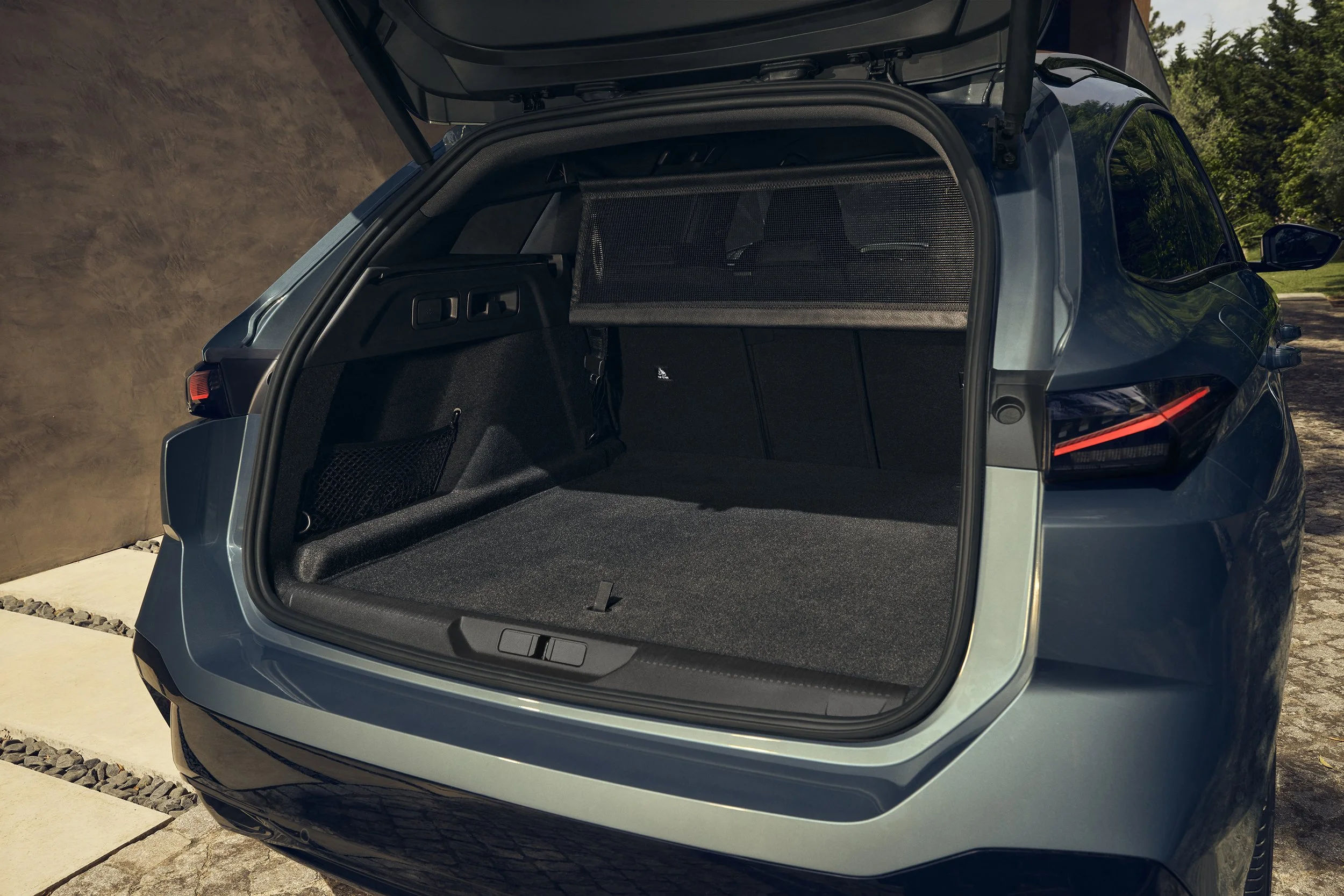
The 308 SW's boot has a nice square shape and no load lip, making it easy to load items. If you have a lot to carry, lowering the rear seats increases storage capacity to up to 1,487 litres.
There are several hooks available to keep your luggage from sliding around, along with a small storage net on one side and a 12V socket. While the E-308 SW has limited underfloor storage, there is just enough space to fit the charging cable.
Summing up.
For those seeking a stylish and practical family car with a premium interior that isn’t an SUV, the Peugeot 308 SW is definitely worth considering. This already sleek estate car has become even more eye-catching thanks to its mid-life makeover. Additionally, with options for full-hybrid, plug-in hybrid, and pure-electric versions, customers can choose the model that best fits their needs and lifestyle.
However, it’s important to note that the 308 SW (like its hatchback counterpart) doesn’t offer as much rear passenger space as some competitors. There are also other estate cars, such as the Skoda Octavia Estate, that can accommodate more cargo, which is one of the main reasons for choosing this type of vehicle.
The significant £10,000 price reduction for the electric E-308 SW makes it an attractive alternative to the numerous electric SUVs currently available. That said, the Peugeot’s driving range and rapid-charging capabilities can’t quite match those of its taller rivals. Overall, the Peugeot 308 SW proves to be a great all-round family car.