Toyota’s Super Mini the Yaris is Perfect in Town and Country.
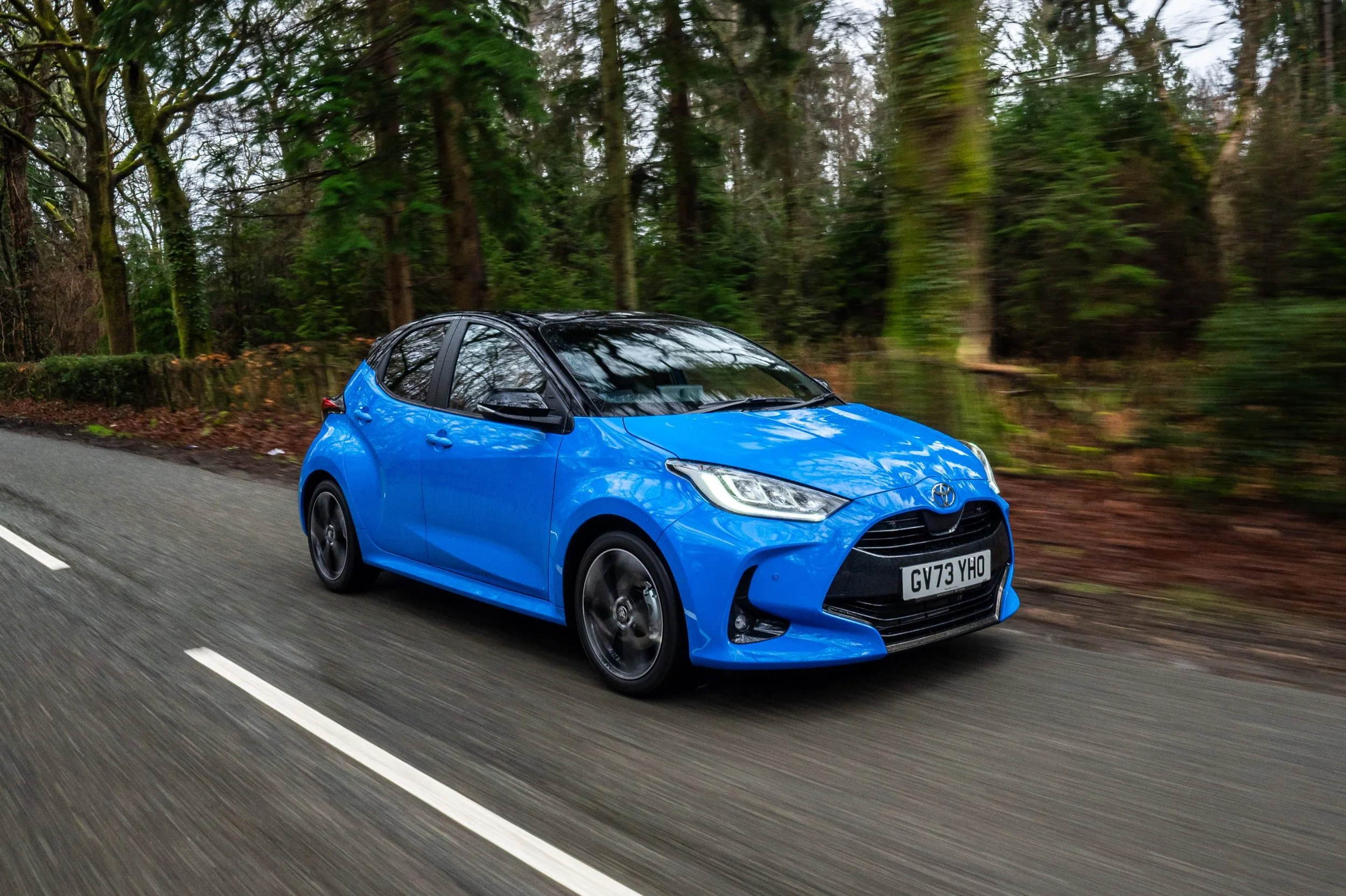
Driving a Toyota, you expect reliability, practicality, and good handling, and with the Yaris, you get these qualities. The Yaris is in the Super Mini class, meaning it is a small car that offers decent performance. Jeremy Webb found out on the roads of West Sussex that the Toyota Yaris is also enjoyable to drive.
The Yaris starts at just under £24,000 for the entry-level Icon model. Our recommended Design trim is priced at approximately £25,500. The more premium Excel trim costs slightly more, around £28,500, while the sportier GR Sport trim is priced at just under £30,500.
The Toyota Yaris is a well-rounded vehicle that offers commendable performance in various driving conditions. Its hybrid configuration is especially beneficial for drivers who prefer a gentler driving style, offering a smooth, serene journey. The Yaris features an efficient front-wheel-drive system and a simple suspension setup with MacPherson struts in the front and a torsion beam in the rear. This design enhances stability and contributes to a comfortable ride, making it an ideal choice for both city commuting and longer trips. Whether navigating busy urban streets or cruising scenic routes, the Yaris delivers a reliable, enjoyable driving experience.
One of the standout benefits of the Toyota hybrid system is its seamless convenience, allowing drivers to avoid the hassle of plugging in the vehicle to recharge. There's no need to hunt for a charging station or struggle with extension cords to power up overnight. Instead, the Yaris features an innovative regenerative braking system that cleverly captures energy when you brake or coast, converting it into electricity to 'refill' the battery pack. Additionally, when the engine produces excess power during operation, it's efficiently diverted to further charge the battery, ensuring that the vehicle remains energised without the driver ever needing to stop for a plug-in recharge.
In urban environments, the Yaris truly excels, demonstrating its impressive capabilities. Both the 114bhp and 128bhp variants deliver lively performance at lower speeds, largely thanks to the electric motor, which provides an immediate boost of power. This instant acceleration makes the Yaris feel remarkably responsive when starting from a stop, resulting in a smooth driving experience. In contrast, vehicles like the DSG automatic-equipped Skoda Fabia or VW Polo experience a noticeable delay; there is a distinct lag between pressing the accelerator and the car's response. This makes the Yaris feel much more agile and easier to drive in stop-and-go traffic.
The Yaris boasts highly responsive steering, enhancing its agility and allowing it to navigate tight turns with ease. This precision makes parking in narrow spaces simple. With its compact exterior dimensions, the Yaris is particularly well-suited for busy urban environments where space is often limited.
The braking system delivers a smooth, controlled stop and strong stopping power, ensuring safety in situations where quick halts are necessary, such as when pedestrians cross unexpectedly. The vehicle's agile handling enables drivers to easily navigate around obstacles like potholes and deep drain covers, resulting in a more enjoyable driving experience. Additionally, the suspension is designed for comfort, effectively absorbing the impact of speed bumps and improving ride quality. This makes for a smooth journey, even over uneven surfaces.
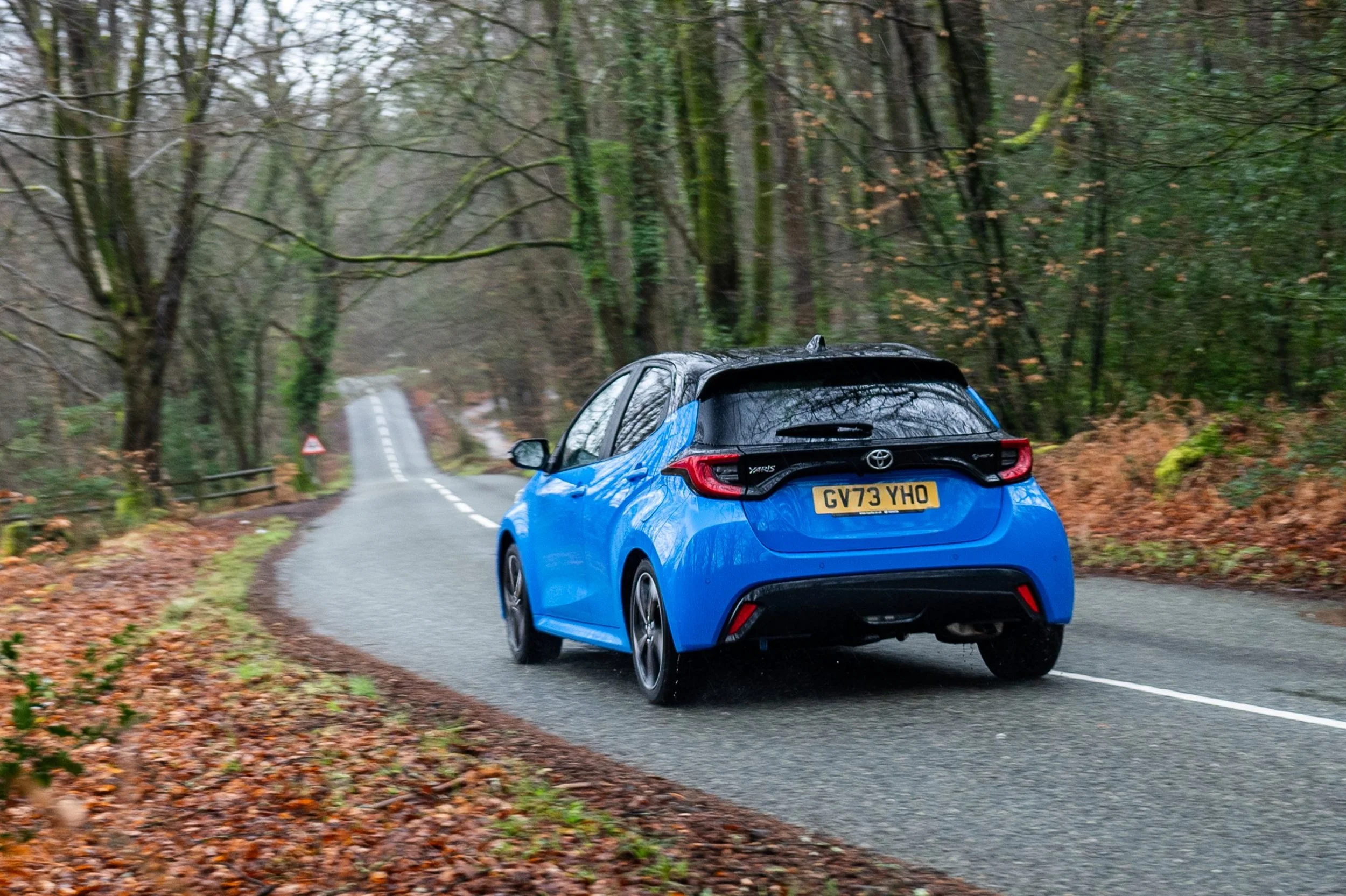
As you venture beyond the busy city streets, you'll quickly notice that the CVT transmission is not ideal for navigating the winding back roads. During hard acceleration, the engine becomes quite loud, with the RPMs rising sharply as you work to gain speed.
The handling of the Yaris is generally pleasant, as it manages to maintain composure in tight corners with only a modest amount of body lean. However, the ride can feel somewhat firm, and noticeable fidgeting occurs over rougher surfaces at higher speeds. This is an area where the more refined Renault Clio performs better. Despite this, the Yaris's suspension effectively absorbs larger bumps, providing a ride that doesn't feel harsh or jarring.
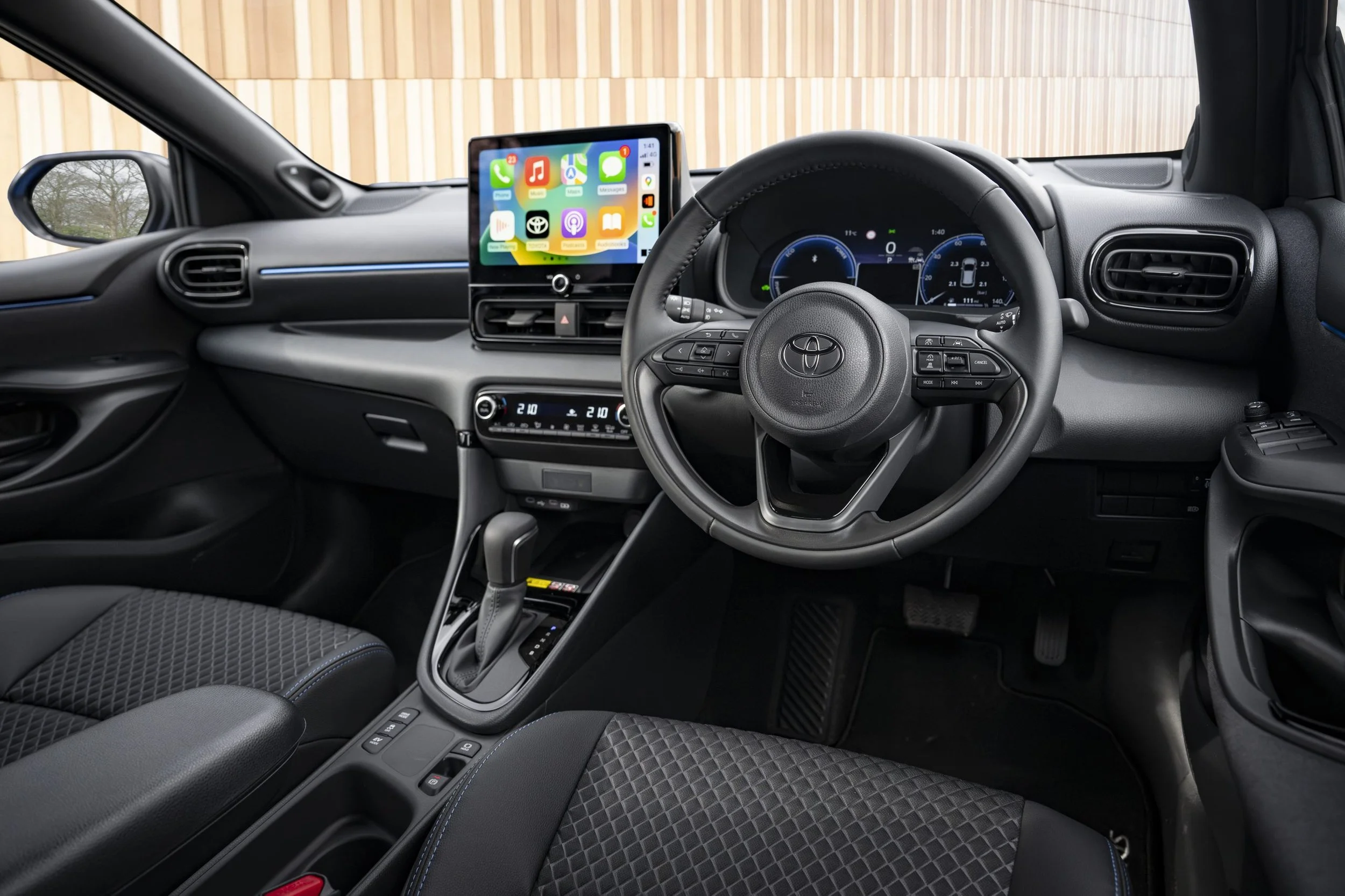
On motorways, the Yaris performs well, but the Clio offers a more comfortable long-distance experience. Additionally, the Yaris's engine can sound strained at higher speeds, and there is noticeable road noise. Nevertheless, the Yaris remains stable at 70 mph and handles bumps effectively, ensuring a smooth ride.
The Toyota Yaris starts at around £23,500, which may not seem like a great value in the supermini segment at first glance. This perception is strengthened when you compare it to the base model of the Renault Clio E-Tech, priced just over £1,500 lower. However, the Yaris is more competitively priced than the Honda Jazz hybrid, underscoring its market advantage.
When it comes to fuel efficiency, Toyota's Yaris stands out with an impressive average of 68.9 miles per gallon (mpg) on the combined cycle. I achieved an average of 65 mpg, a figure that remained consistent even in urban driving, which is often characterised by frequent stops and starts. It's important to note that the more powerful 128bhp variant offers a slightly lower fuel economy of 67.3 mpg. However, this difference is minor and hardly noticeable in everyday driving, reinforcing the Yaris's reputation for efficiency and reliability.
The standard equipment is quite impressive across the range. The entry-level Icon trim comes with 16-inch alloy wheels, automatic headlights and wipers, adaptive cruise control, air conditioning, a reversing camera, and a multifunction leather-trimmed steering wheel. However, it features manual rear windows, which might be less convenient for those with small children. If this is a concern, it’s advisable to consider a higher trim that includes electric rear windows, which can be locked to prevent children from opening them.
Moving up to the Design version adds valuable features such as:
- 17-inch wheels
- Rear privacy glass
- Electric rear windows
- LED headlights
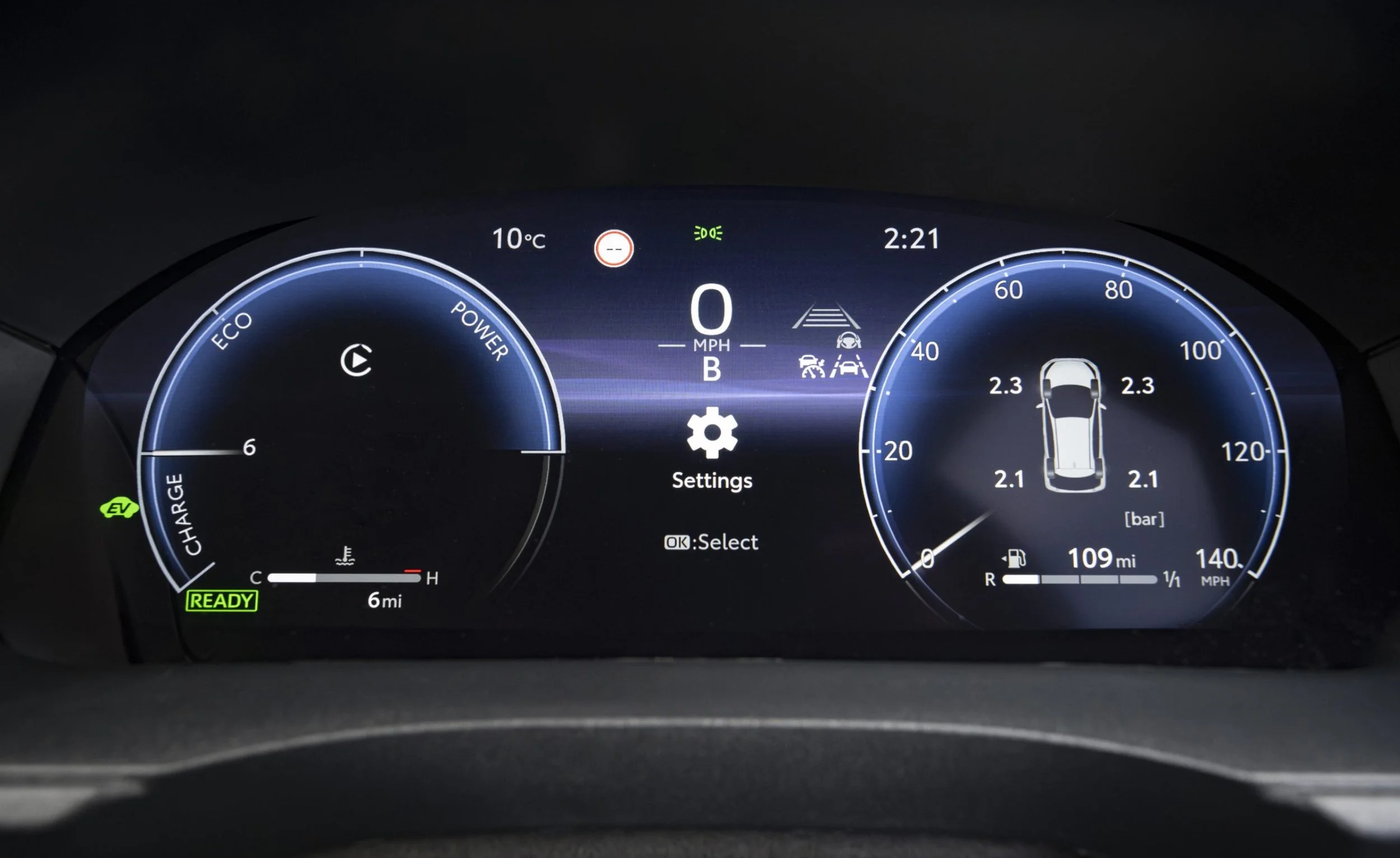
The Excel trim introduces additional benefits, including wireless phone charging, front and rear parking sensors, a 12.3-inch digital instrument cluster, blind-spot monitoring, and satellite navigation with full wireless smartphone integration.
Interestingly, the GR Sport, despite being priced higher than the Excel model, offers equipment similar to the Design trim but with sportier styling, both inside and out.
Interior
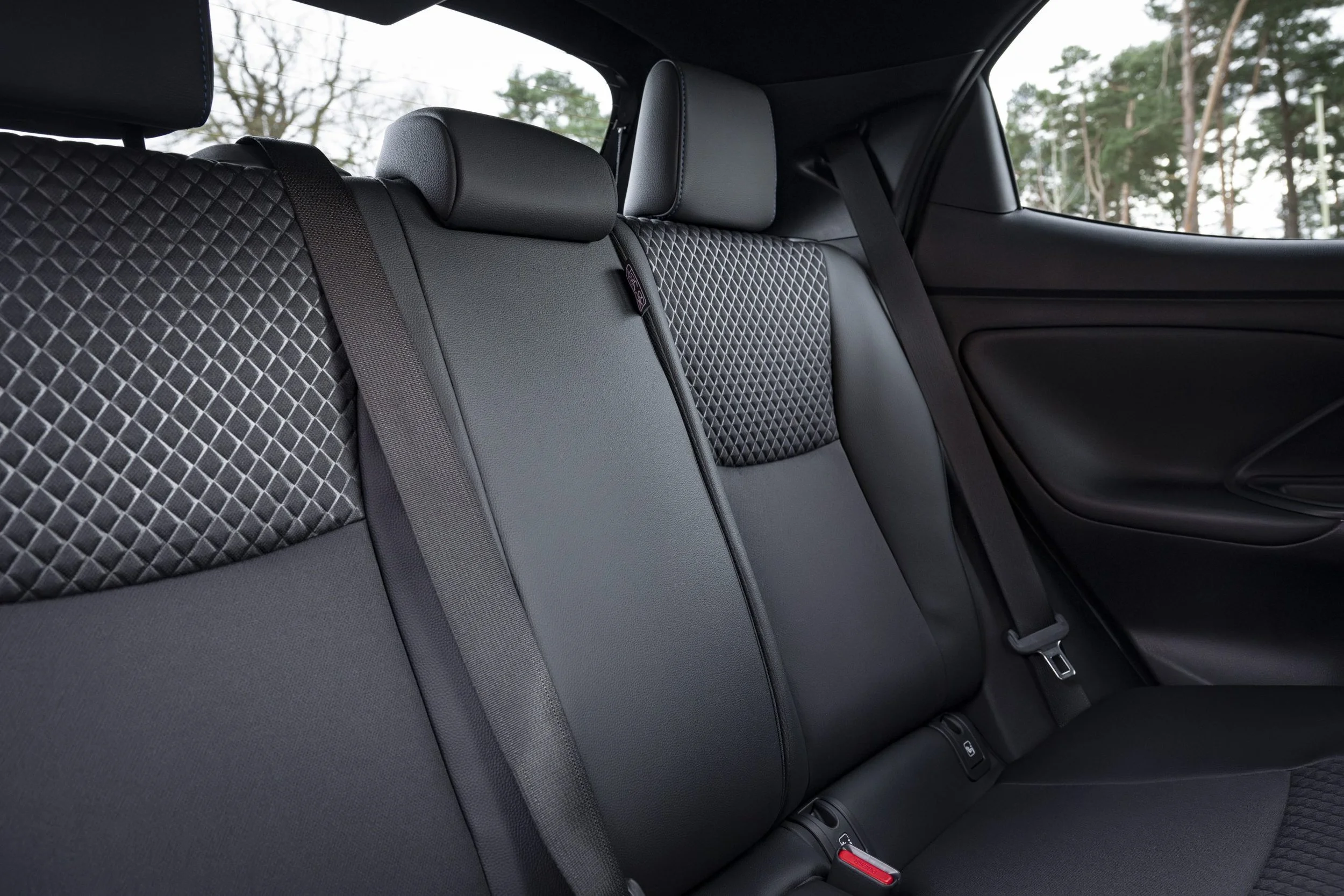
The dashboard is solid and practical, though it lacks a bit of flair. However, we appreciate the user-friendly climate controls, which give it an edge over touchscreen-based competitors like the Peugeot 208.
Despite this simplicity, the Yaris is equipped for the digital age. The base Icon and our preferred Design trim come with a 9-inch central touchscreen, while the Excel trim and higher models feature a larger 10.5-inch display. Additionally, there are three instrument cluster designs: the Icon features analogue dials, the Design trim combines analogue and digital elements, and the Excel and GR Sport models offer a fully customizable 12.3-inch screen.
The Toyota Yaris is available only as a five-door model and provides excellent practicality for urban drivers. It features numerous storage spaces and compartments for various items, as well as cupholders, convenient seatback pockets, and two rear coat hooks. However, the door bins are somewhat shallow and can be awkward to access due to the shape of the armrest above them.
The driving position and overall visibility in the vehicle are good, as the driver benefits from a height-adjustable seat. The Excel trim includes a height adjustment for the passenger seat as well. The steering wheel is adjustable for both reach and rake, enhancing comfort on longer drives.
Toyota has included several useful features as standard across all Yaris versions, such as a central armrest, automatic headlights, automatic wipers, and power-adjustable heated door mirrors. Additionally, the rear seats can be split-folded in a 60:40 configuration, allowing for increased storage space.
The mid-range Design trim offers brighter LED headlights to improve visibility at night, and all models are equipped with a reversing camera to assist with parking. Front and rear parking sensors are available as an option on the Design and GR Sport models, while they come standard on the Excel trim.
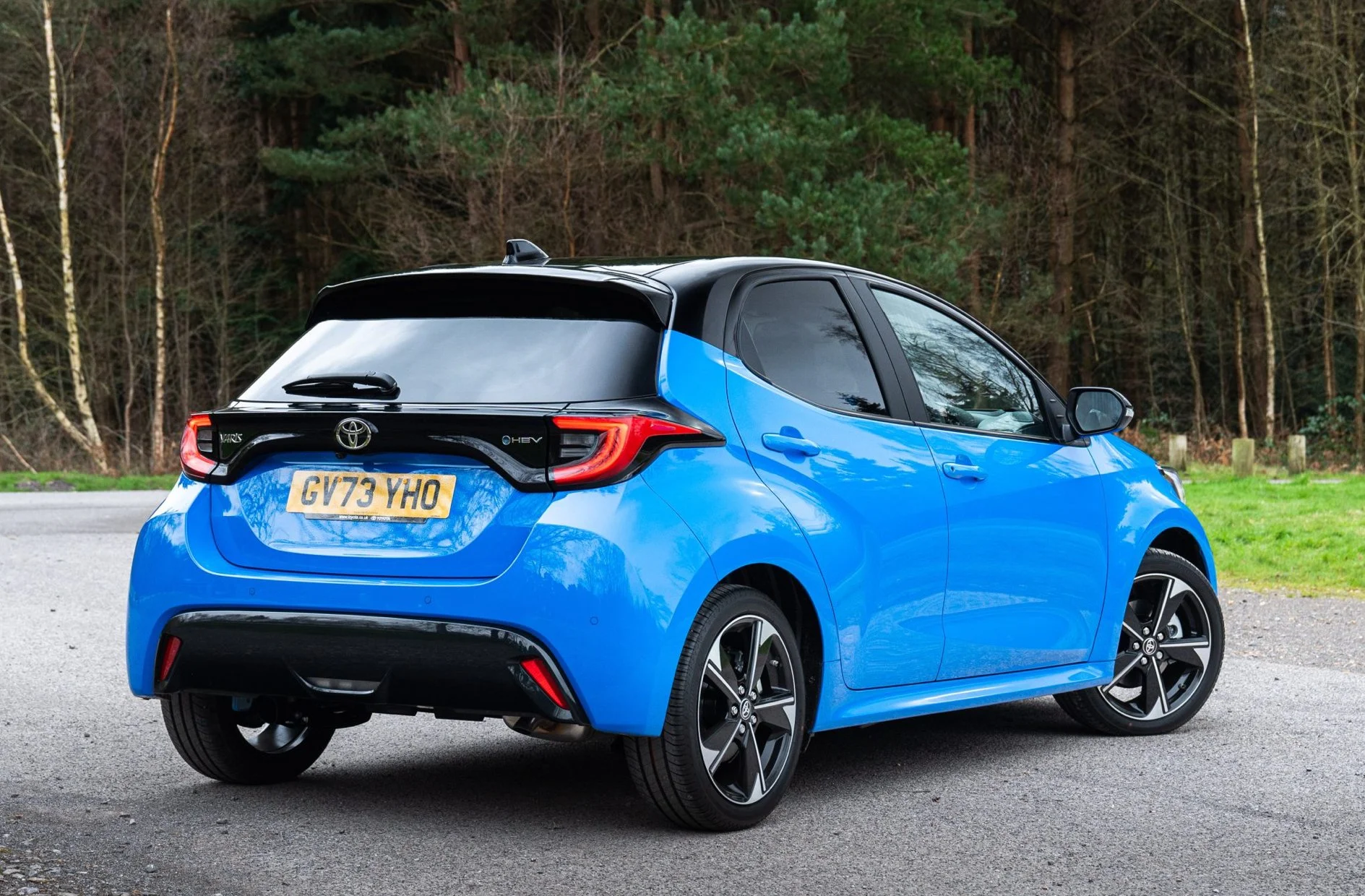
The Yaris comes equipped with a wide range of standard safety features, including active systems like autonomous emergency braking (AEB). This system applies the brakes at lower speeds to help prevent collisions, not only with other vehicles but also with cyclists, motorcycles, and pedestrians. Additionally, it features Emergency Steering Assist and lane-keeping assistance, which gently nudges you back into your lane. There’s also a Driver Attention Alert that activates when the system detects you may need to take a break.
Entry-level models are equipped with a reversing camera, Automatic High Beam, and Toyota's e-call emergency system, which contacts emergency services if an airbag is deployed.
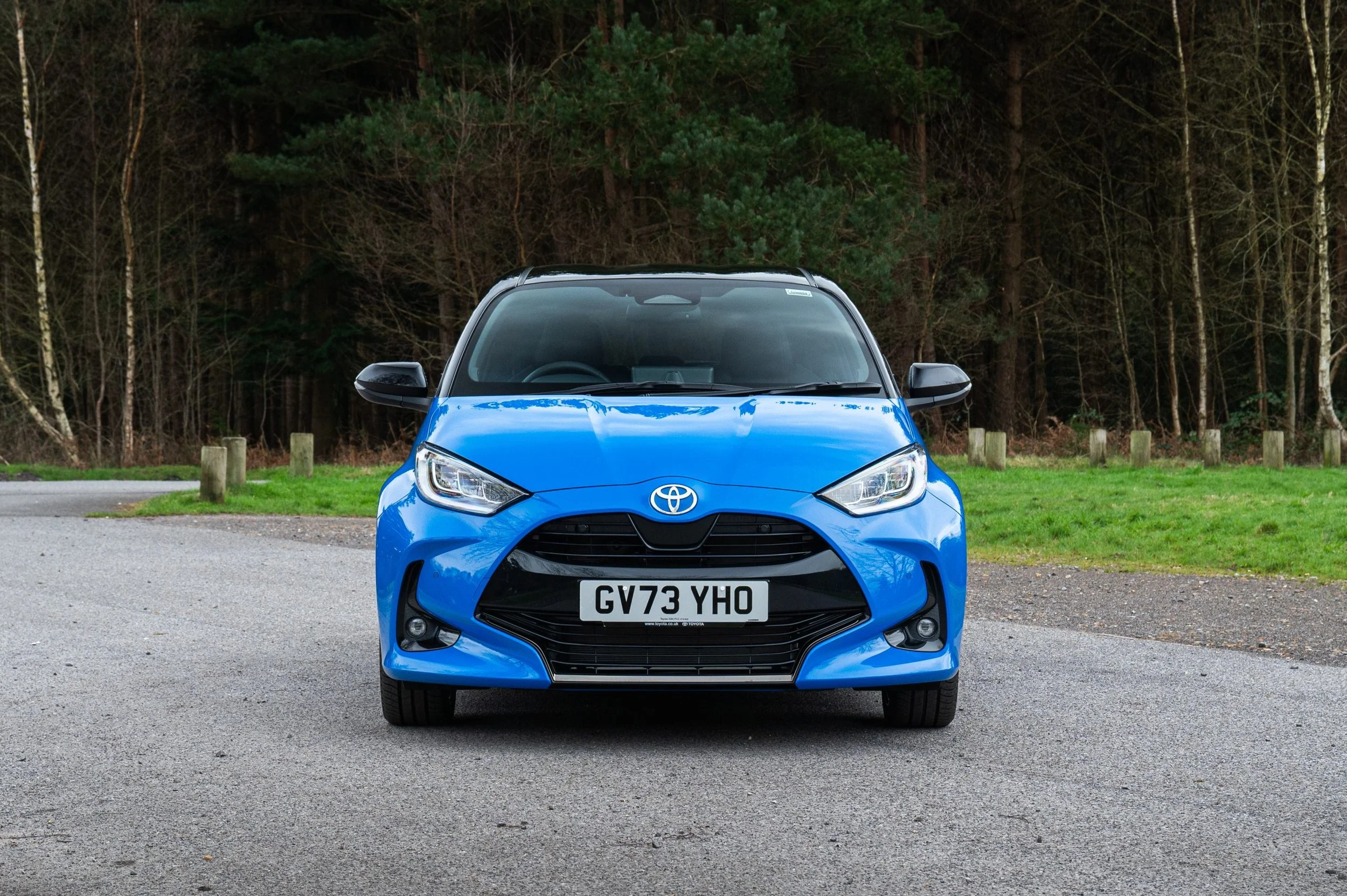
As with most modern cars, the Yaris includes a Road Sign Assist feature that displays speed limit warnings. However, this can be frustrating if it shows an incorrect speed limit for the road you are on. Unlike the Clio, which has a straightforward way to turn this feature off, the Yaris requires you to navigate through multiple sub-menus in the adriver's instrument cluster to switch it off, which can be distracting while driving.
Summing up.
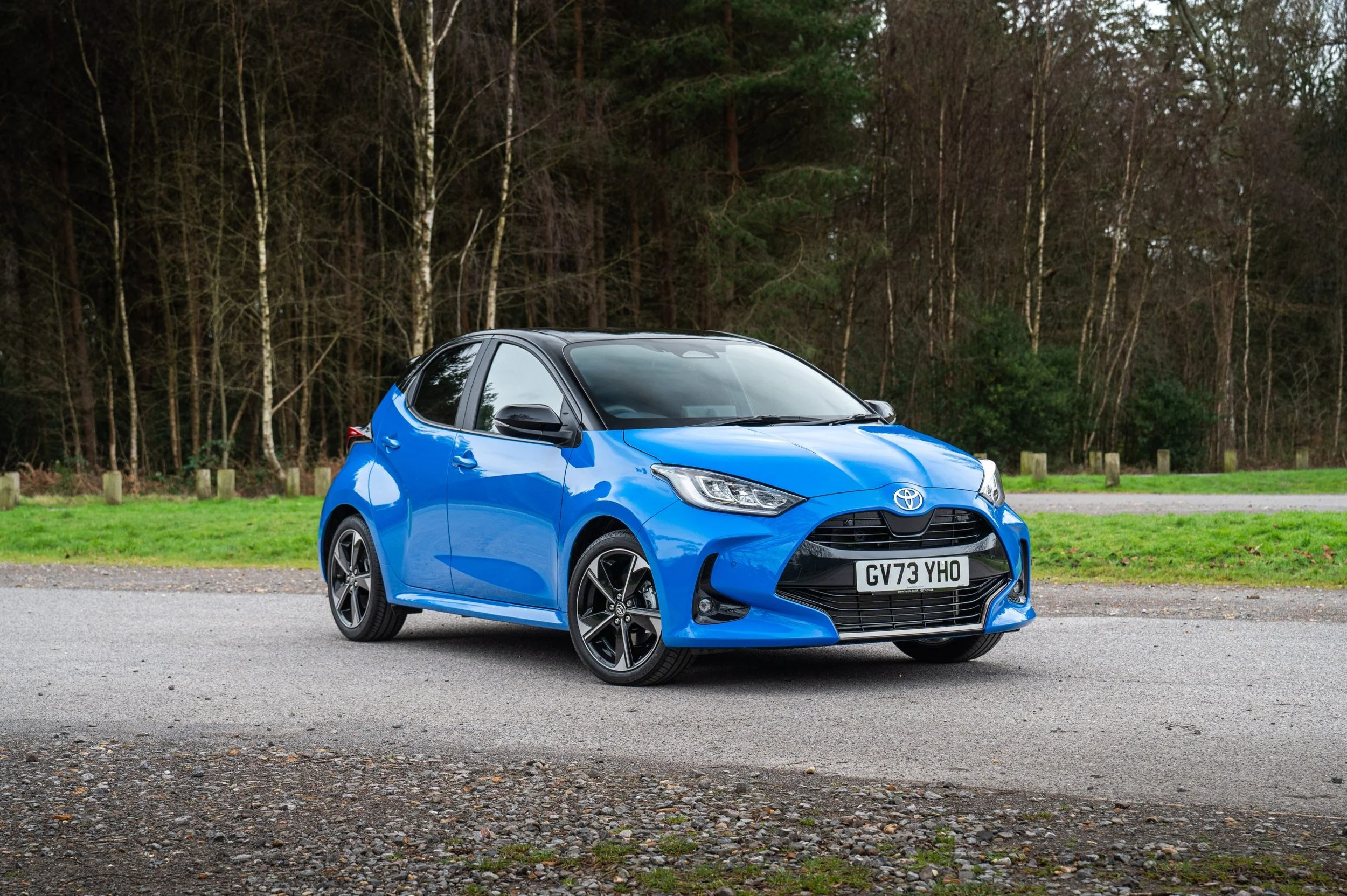
The Toyota Yaris is a superb, practical car which is nippy, agile and enjoyable. It is a super mini, so you buy it for that reason, not as a five-person, cargo-hauling, motorway muncher. Perfect for getting children to nursery, school, or their activities, but you won’t be able to lug much kit around. Nippy in and out of town, the handling is excellent and the economy impressive. It is a car you must take seriously if you are looking for a small, reliable model; you will have many years of happy motoring.